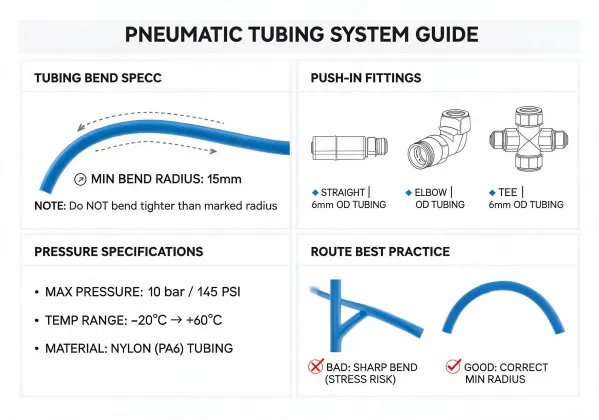
Tubing Route Board
Clarifies movement, radius, fitting direction, and service access before the tube material is chosen.
Design Gallery
Use Festo design boards to compare polymer compounds, plastic packaging formats, pneumatic tubing routes, and application constraints before the formal specification is ready.
Selection matrix
| Design Question | Useful Options | First Evidence to Gather | Festo Prompt |
|---|---|---|---|
| Flexible air routing in compact equipment | Polyurethane tubing, nylon tubing, push-in fittings | Pressure, bend radius, motion frequency, oil exposure | Can the route change without increasing leak risk? |
| Lightweight plastic package redesign | PET, PP, film, closure materials, molded parts | Line speed, drop test target, fill temperature, shelf handling | What performance cannot be lost during downgauging? |
| Molded component material switch | ABS, PC, PA, PP, filled compounds | Temperature, impact, stiffness, appearance, tooling status | Is this a resin issue, a geometry issue, or both? |
| Sample kit planning | Shortlisted materials, tubing sizes, fitting styles | Test method, acceptance criteria, review owner | Which three samples answer the most important question? |
The Design Gallery is not a portfolio of finished consumer concepts. It is a working resource for B2B teams that need to make a material decision with incomplete information. Each board begins with a constraint: movement, pressure, temperature, barrier performance, stiffness, chemical contact, line speed, or documentation. From there, Festo helps buyers compare plausible material families and identify which evidence would make the next decision more reliable. This keeps a creative discussion grounded in engineering reality without making early-stage teams wait until every drawing is complete.
For plastic packaging and processing projects, the gallery helps structure conversations around weight, processing behavior, appearance, and buyer requirements. For pneumatic and tubing projects, it helps review routing, bend radius, fitting style, cylinder placement, and maintenance access. For polymer compound questions, it encourages teams to compare performance limits rather than only names. The result is a concise decision board that can be shared with sourcing, engineering, quality, and operations before a sample request is sent.
Clarifies movement, radius, fitting direction, and service access before the tube material is chosen.
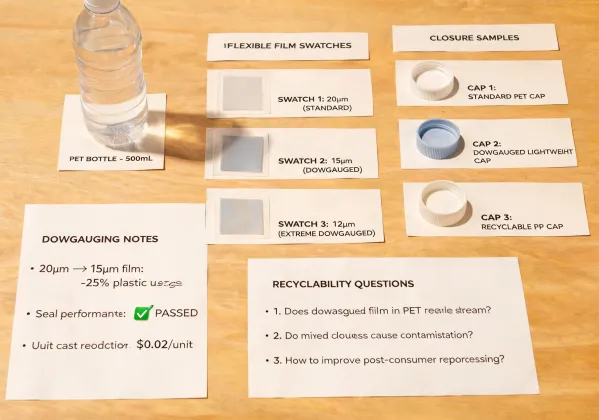
Compares weight, process behavior, handling, and buyer documentation needs for plastic packaging changes.
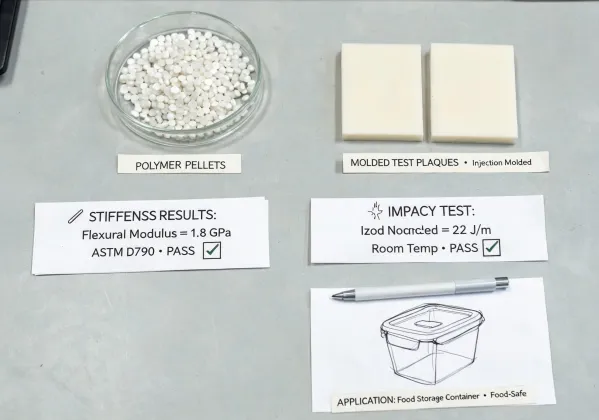
Frames stiffness, impact, heat, appearance, and processing assumptions for molded part selection.
Send Festo a rough description and we will help turn it into a clear comparison table, sample plan, and list of questions worth answering first.